Skip to content
Manager looking at screens-1

Machine Downtime Monitoring


Find the downtime costing you the most output.

icon_padded_grey_graph_2
Increase asset utilisation

Identify underutilised assets and optimise resource allocation.

icon_padded_grey_clock_downtime
Reduce Unplanned Downtime

Identify and address the top causes of downtime with detailed downtime reports.

icon_padded_grey_continuous_2
Drive Continuous Improvement

Drive continuous improvement: optimise processes for speed, quality and cost savings.

Turn every stoppage into useful evidence

FourJaw automatically detects when production stops and gives operators a quick way to record the reason.

Downtime reports then rank lost time by machine, shift and cause, helping your team focus on the problems with the greatest effect on output.


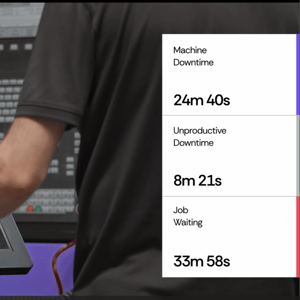
Machine downtime reasons shown on image

The most visible stoppage is not always the most expensive

Large breakdowns attract immediate attention. Repeated short stops, setup delays, material waits and time without an operator are easier to overlook, particularly when downtime is logged manually or from memory at the end of a shift.

Without a complete record, teams often fix the most frustrating problem rather than the one responsible for the most lost production.

Capture when production stops

The FourJaw MachineLink hardware records changes in machine activity automatically, creating a timestamped production timeline without relying on manual observation.


Record why it stopped

The Operator Workspace prompts the operator to select a reason from a predefined list. The process takes a two taps and uses the terminology familiar to your factory.

Rank the root causes

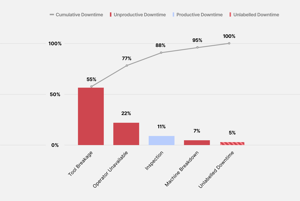
Downtime reports and Pareto analysis show which causes account for the most lost time. Filter the data to understand patterns by machine, shift, job or production area.

Measure the impact on downtime

Use the original downtime baseline to track whether maintenance, process, staffing or training changes reduce the loss over time.

A fitness tracker for your machines

Machine activity is captured automatically, so operators are not asked to recreate the whole shift on paper. Their role is to add the cause that the machine cannot know.

This provides managers with better production context while recognising that operators are closest to the process and often know what prevented the machine from running.

Try it for yourself.

Select machine type
CNC Machine
Mills, Lathes, Routers, Lasers
Manual Machine
Manual Lathes, Band Saws, Drill Presses
Production Line
Conveyors, Packaging, Bottling, Assembly
Start Machine
5-Axis CNC Center
Live Telemetry Stream
0.0A
Idle
plug and play icon
Non-Invasive
Clips onto the power cable. No connection to machine controller required.
icon_padded_grey_conveyer_belt
Pattern Recognition
High current draw indicates the machine is under load (Productive).
icon_padded_grey_cloud
Secure
No PLC Integrations Required
Manufacturing production dashboard showing performance of machines

Machine Downtime Monitoring Features

Downtime data becomes valuable when it changes a decision. FourJaw's platform helps teams decide whether to prioritise maintenance, improve a changeover, provide material earlier, change staffing coverage or address a recurring process constraint.

The same evidence can support daily production meetings, continuous improvement projects and investment cases.

Explore the features that make this all possible. 


Machine Utilisation

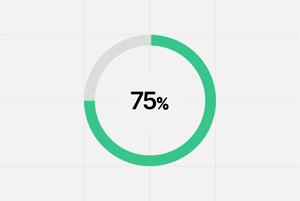
FourJaw provides standardised machine utilisation data, enabling you to identify inefficiencies and optimise existing resources.

Utilisation

Production Timeline

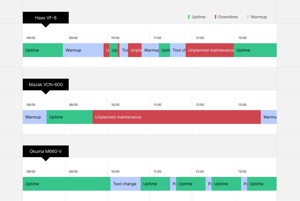
We make manufacturing Production monitoring easy. Get a true view of machine downtime, see overall production performance, and use the insight to anticipate issues ahead of the next shift.

Timeline-1

OEE Availability

Enhance operational efficiency and reliability in manufacturing processes by understanding your overall equipment effectiveness.  Get a real-time view of productivity to get a true view of asset utilisation and capacity. 

OEE Availability (Medium)

Downtime Reporting

Understand the top causes of machine downtime and their affect on costs and performance. Take corrective action to target downtime where it matters most using pareto analysis.

Frame 652
CNC_Metal_Items

FourJaw is helping us move towards 4.0 based on our S&OP. It allows us every month to analyse with the directors to see our strengths and weaknesses and plan forward based on what we find.

Charlie Stothard, Process Improvement Manager

FourJaw has delivered a significant and sustained improvement in the productivity levels we're getting from our manufacturing centres resulting in a 30% overall increase in uptime.

Sean Thomas, Head of Operations

Downtime evidence behind measurable decisions

Thirty per cent increase in uptime

AVPE Systems used FourJaw to identify and address the causes responsible for the most lost production. The manufacturer reported a 30% increase in factory uptime.


Image Duetone no lines

FAQ’s

Here's some of the most common questions we get asked from manufacturers who are looking to install machine monitoring software within their manufacturing operations. 

What is machine downtime?

In simple terms, machine downtime refers to any period in which a machine is not available for production. This can be categorised into two broad types:


Planned (productive) downtime: such as scheduled maintenance,  changeovers, or quality inspections, which are controlled and necessary to ensure smooth operations.

Unplanned (unproductive) downtime: sudden stoppages due to breakdowns, operator unavailability, supply issues, or other unexpected factors that disrupt output.


What are the common causes of Machine Downtme?

Machine downtime can occur for a variety of reasons, and understanding these root causes is the first step toward reducing them.

While every industry has unique challenges, machine downtime typically
arises from five broad categories:

1. Equipment Failures

2. Human Factors

3. Planning and Process Issues

4. Materials & Inventory

5. External Environmental Factors

We explore these common downtime causes in more detail in our guide 'Why Understanding machine downtime is essential for manufacturers'. 

Does machine monitoring do the same as a production monitoring system? Yes, machine monitoring is similar to Production monitoring systems or production efficiency tracking systems. It tracks, alerts, and analyses key production data coming from machines and jobs. This enables manufacturers to understand the efficiency of their production and provides insight into where changes need to be made to improve production processes at a machine, job, or resource level. 
How can machine monitoring help productivity?

By leveraging the capabilities of machine monitoring systems, manufacturers can gain valuable insights, enhance control over their processes, and systematically eliminate waste, thus achieving greater efficiency and productivity. 

Many manufacturers use machine monitoring as part of their wider continuous improvement initiatives. As the data is ideal to help identify and inform what machines and processes can be improved. 

How important is productivity in manufacturing?

The importance of manufacturing productivity lies in its impact on overall operational performance, competitiveness, and profitability.

Manufacturing productivity refers to the efficiency and output of a manufacturing process in relation to the resources invested, such as labour, time, energy, and materials. It is a measure of how effectively a factory or production facility converts inputs into outputs, typically measured by the quantity and quality of goods produced within a given time frame. You can read our blog that looks at the importance of manufacturing productivity here

What tools and methodologies can help improve manufacturing productivity?

There are many methodologies and tools that manufacturers can use to help manage and improve productivity. Perhaps most famously is Kaizen, which originated from Japan and is infamous with the Toyota Production System. 

Here are a few of our recommendations:

Kaizen (Continuous Improvement)

The 8 wastes of lean 

Lean & Agile Manufacturing principles 

SMED - Short for Single-Minute Exchange of Die

The 5S Methodology 

Lean and Scrum Framework

Can FourJaw be used with older machinery?

Absolutely. We've tailored our machine monitoring system to ensure it's usable by manufacturers across the board, which includes ensuring compatibility with machines of every age, make, or model. This means even machinery that's decades old can be upgraded to a "smart machine," enabling you to gain insights into the productivity of your equipment.

How does FourJaw capture Downtime Data?

FourJaw captures downtime data through a combination of its MachineLink hardware and tablets mounted on the machines.

When a MachineLink detects downtime, it automatically prompts the operator via the tablet to select the reason for this downtime from a predefined list.

This process is quick and non-disruptive, designed to minimise interruption to the operator's workflow.

By simplifying the input method to just a few taps, FourJaw ensures that accurate downtime reasons are recorded with minimal effort, enabling a comprehensive analysis of machine productivity and downtime causes without impeding your operators.

Do you have any examples of manufacturers improving productivity?

Yes,  we have a number of manufacturing success stories that provide real-life examples of how manufacturers have benefited from our machine monitoring platform. 

Here are some examples that focus on productivity improvement:

Aerospace Manufacturer sees factory uptime increase by 30%

Luxury goods manufacturer sees machine productivity increase by 14% and parts capacity increase by 65%.

Global aerospace component manufacturer finds 273 lost productive hours per week.