Skip to content
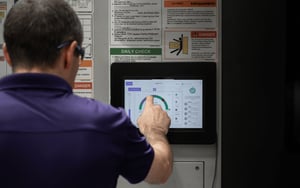
FourJaw Production Dashboards showing machine utilisation on factory floor-1

Machine Monitoring Software:
Definition, Benefits, Applications and Best Practices

A complete guide for manufacturers exploring machine and production monitoring software solutions. 

Machine Monitoring Software:
The Complete Guide - Introduction

Manufacturers have never had more pressure to produce more with less. Rising operating costs, labour shortages, increasing customer expectations and global competition mean every hour of production matters. Yet many businesses still struggle to answer fundamental questions about what is happening on the shop floor in real time.

Which machines are running? Where is production being lost? How much downtime is planned, and how much is avoidable? Are production targets being met? Without accurate, real-time data, these questions are often answered through manual records, assumptions or end-of-shift reports—long after opportunities to act have passed.

Machine monitoring software has emerged as a key technology for manufacturers looking to improve operational performance. By automatically collecting and analysing data from production equipment, it gives manufacturers real-time visibility into machine utilisation, downtime, production output and overall equipment effectiveness (OEE). This enables teams to identify inefficiencies, respond more quickly to problems and make better-informed decisions based on objective production data.

Whether you are exploring machine monitoring for the first time or evaluating software solutions, understanding how these systems work—and how they fit alongside technologies such as Manufacturing Execution Systems (MES), Industrial Internet of Things (IIoT) platforms and production planning software is essential.

This guide explains what machine monitoring software is, how it works, the data it collects, its benefits and limitations, and the role it plays in modern manufacturing. Drawing on recognised manufacturing principles, industry best practice and independent sources, it aims to provide a practical, vendor-neutral reference for manufacturers, engineers and operations leaders.

.

What is machine monitoring software?

Machine monitoring software is a category of industrial software that automatically collects, visualises and analyses data from manufacturing equipment to provide real-time visibility into machine performance, utilisation and production.

By continuously monitoring machine status, production output and downtime, manufacturers can identify inefficiencies, improve Overall Equipment Effectiveness (OEE), increase productivity and make more informed operational decisions.

Unlike traditional manual production reporting, machine monitoring software provides live operational data that enables supervisors, production managers and business leaders to react to issues as they happen rather than after the end of a shift.


Key takeaway: Machine monitoring software helps manufacturers understand what every machine is doing, why production stops occur, and where opportunities exist to improve productivity.


Why manufacturers use machine monitoring software

Manufacturing businesses face constant pressure to increase output while controlling labour, energy and operating costs. However, many factories still rely on manual production sheets, whiteboards or retrospective reports that provide only a partial picture of what is happening on the shop floor.

Machine monitoring software addresses this challenge by providing continuous visibility into manufacturing operations.

Common objectives include:

  • Increasing machine utilisation

  • Reducing unplanned downtime

  • Increasing production capacity

  • Improving OEE

  • Understanding production bottlenecks

  • Measuring production output

  • Supporting continuous improvement initiatives

  • Identifying energy waste

  • Improving production planning

  • Providing accurate production reporting

  • Supporting Lean manufacturing programmes

How machine monitoring software works

1. Data collection

Software captures information directly from production equipment using one or more methods:

  • PLC integration

  • CNC integration

  • Current sensors

  • Power monitoring

  • Edge devices

  • OPC UA

  • MTConnect

  • Modbus

  • IoT sensors

  • Manual operator input

2. Data processing

The collected information is transformed into meaningful production events such as:

  • Running

  • Idle

  • Changeover

  • Breakdown

  • Planned downtime

  • Waiting for material

  • Maintenance

  • Setup

3. Data visualisation

The production information is displayed through:

  • Live dashboards

  • Production boards

  • Reports

  • Alerts

  • Trend analysis

  • KPI dashboards

4. Continuous improvement

Manufacturers use these insights to:

  • Reduce recurring downtime

  • Improve scheduling

  • Balance workloads

  • Increase throughput

  • Monitor improvement programmes

  • Track operational performance over time

  • Track Cost of Goods Sold (COGS)
fourjaw production monitoring

What data can machine monitoring software collect?

The capabilities depend on both the software and the connected equipment, but common data includes:

Machine status

  • Running, Idle, Faulted, Offline

Production data

  • Parts produced, Good parts, Scrap, Production rates, Work order progress

Downtime

  • Downtime duration, Downtime reason,  Frequency, Root causes

Performance

  • Cycle time, Utilisation, OEE, Availability, Performance losses

Energy

Some systems also capture:

Manufacturing production dashboard showing performance of machines

Benefits of machine monitoring software

There are several benefits of machine monitoring software, and different manufacturers will likely experience different benefits based on their original objectives. However, common benefits that we see broadly across our customers include: 

Improved visibility

Live operational visibility enables faster decision-making.

Increased machine utilisation

By identifying lost production time, manufacturers can recover productive capacity without investing in additional machinery.

Reduced downtime

Recording downtime reasons enables businesses to focus improvement efforts where they deliver the greatest operational impact.

Better production planning

Accurate production data supports improved scheduling, staffing and delivery forecasting.

Data-driven continuous improvement

Objective production data replaces assumptions and enables Lean and Six Sigma teams to prioritise improvements.

Improved communication

Live dashboards provide operators, supervisors and management with a shared view of production performance.

Read some manufacturing use cases here to learn more about the benefits of machine monitoring. 

A Buyer's Guide to Machine Monitoring

7 Things to look for when choosing a Machine/Production Monitoring System

Limitations

Machine monitoring software is not a complete manufacturing solution, and it shouldn't try to be. 

Instead, it should complement your other systems, giving you access to key production data that otherwise wasn't possible to see. 

Like all good digitisation or IT projects, the success largely depends on the technology and the people working together, for example:

  • Good implementation

  • Accurate machine connectivity

  • Operator engagement

  • Consistent downtime categorisation

  • Continuous review of collected data

  • Management commitment to improvement

Software identifies opportunities, but operational improvements still require people and process change.

See how machine monitoring using a sensor works

Try this interactive tool that simulates how FourJaw's machine monitoring software translates raw electrical signals, using sensors, into actionable production data in real-time. Works on any machine, any age, any brand.
Select machine type
CNC Machine
Mills, Lathes, Routers, Lasers
Manual Machine
Manual Lathes, Band Saws, Drill Presses
Production Line
Conveyors, Packaging, Bottling, Assembly
Start Machine
5-Axis CNC Center
Live Telemetry Stream
0.0A
Idle

Machine monitoring software vs other manufacturing systems

Technology

Primary purpose

Machine Monitoring Software

Monitor equipment (machine(s)) performance in real time

MES

Manage production execution across the factory

SCADA

Supervisory control and industrial process control

ERP

Main business processes, such as planning, finance, purchasing and inventory

CMMS

Maintenance planning and asset management

IIoT Platforms

Collect and connect industrial device data - usually linked with Machine monitoring software

How to choose machine monitoring software

Selecting the right machine monitoring software is about more than comparing feature lists. The most effective solution is one that aligns with your manufacturing processes, integrates with your existing equipment and provides reliable data that drives measurable operational improvements.

Before evaluating vendors, it's worth understanding what success looks like for your business. Are you looking to reduce downtime, improve OEE, increase production visibility or support a wider digital transformation initiative? Having clear objectives will help you assess which capabilities are most important.

When comparing solutions, consider the following factors:

Compatibility with your machines

Not all manufacturing equipment is connected in the same way. Some software relies on PLC or CNC integrations, while others can monitor legacy machinery using non-invasive sensors or edge devices.

Ease of implementation

A lengthy implementation can delay value and increase disruption to production. Look for a solution that can be deployed quickly, with minimal downtime and a straightforward onboarding process.

Data accuracy and reliability

The quality of your decisions depends on the quality of your data. Understand how the software captures machine states, validates production data and handles issues such as network interruptions or missing information.


Reporting and dashboards

Different users require different levels of insight. Operators may need live machine status, supervisors may require shift performance dashboards, while senior management often needs trend analysis and executive reporting.

Scalability

Manufacturing businesses evolve over time. A solution should be capable of supporting additional machines, production lines or sites without requiring a complete change of platform.

Security and data governance

As with any connected manufacturing technology, cybersecurity should be carefully considered.

Vendor expertise and customer support

Successful implementation depends on more than software alone. Evaluate the vendor's experience within manufacturing, the quality of onboarding and training, the availability of technical support and their approach to ongoing product development.

Total cost of ownership

Software licensing is only one part of the overall investment. Consider implementation costs, hardware requirements, support, maintenance, training and the internal resources needed to manage the system. A lower upfront cost does not always represent the best long-term value.

Machine monitoring software

Frequently Asked Questions

What is machine monitoring software?

Machine monitoring software automatically collects and analyses production data from manufacturing equipment to provide real-time visibility into machine performance and productivity.


Is machine monitoring software the same as an MES?

No. Machine monitoring focuses on measuring and analysing equipment performance, while an MES manages and coordinates manufacturing operations.

Does machine monitoring software work on older machines?

Many modern solutions can monitor legacy equipment using non-invasive sensors or edge devices, without requiring modern CNC controls or PLC connectivity.

What is the difference between machine monitoring and OEE software?

Machine monitoring collects operational data. OEE software uses that data to calculate Overall Equipment Effectiveness and other production metrics.

Can machine monitoring software reduce downtime?

It cannot eliminate downtime by itself, but it enables manufacturers to identify recurring causes, prioritise improvements and measure the impact of corrective actions.

What questions should I ask a machine monitoring vendor? Here's some questions to consider when speaking to a machine monitoring software vendor.

  • How does the software collect data from legacy machines?

  • What hardware is required for installation?

  • How long does a typical implementation take?

  • Which ERP, MES or CMMS platforms can it integrate with?

  • How is OEE calculated?

  • Can dashboards be customised for different users?

  • How is production data secured?

  • What training and onboarding are included?

  • How is ongoing customer support provided?

  • What is the typical return on investment, and how is it measured?

Final thought

Machine monitoring software has become a foundational technology for modern manufacturing, enabling businesses to move beyond assumptions and make decisions based on real-time operational data. By providing greater visibility into machine utilisation, downtime, production output and overall equipment effectiveness, it helps manufacturers identify opportunities to improve productivity, reduce waste and support continuous improvement.

As manufacturing continues to evolve through Industry 4.0, Industrial IoT and increasing automation, access to accurate shop floor data is becoming a competitive advantage rather than a luxury. Whether implemented as a standalone solution or alongside existing manufacturing systems, machine monitoring software provides the insight needed to understand how production is performing and where improvements can be made.

Choosing the right solution requires careful consideration of your operational objectives, existing equipment and long-term digital strategy. By understanding the capabilities, benefits and limitations of machine monitoring software, manufacturers are better equipped to select a platform that delivers lasting value and supports sustainable operational excellence.

Thanks for reading. 

Ready to
Learn More?

If you're looking for an affordable and simple machine monitoring software, we'd love to talk to you. Simply request a demo and one of our team will be in touch. 

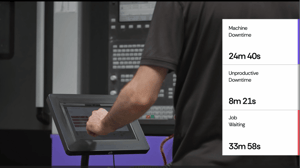
FourJaw Overlay downtime-1

About this guide

This guide has been developed by the manufacturing specialists at FourJaw to provide an objective introduction to machine monitoring software and its role in modern manufacturing.

It draws on established manufacturing principles, recognised industry terminology and publicly available research from standards bodies, industry organisations and independent sources.

Our aim is to provide a practical, vendor-neutral resource that helps manufacturers understand the technology, evaluate its capabilities and make informed decisions.

As manufacturing technologies and best practices continue to evolve, this guide is reviewed and updated periodically to ensure its accuracy and relevance.