Skip to content
View of CNC machine son factory floor using FourJaw

thin review banner
Support Manufacturing
Reveue Growth


Build the capacity to fulfil more demand.

Create production capacity to support revenue growth

When customer demand exceeds production capacity, lost machine time can limit growth.

FourJaw enables manufacturers to identify recoverable capacity and give commercial teams a clearer view of the work the factory can fulfil.
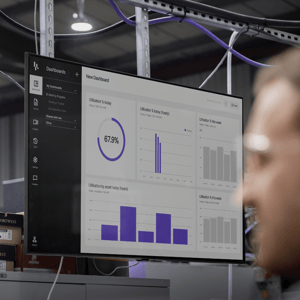
Production data shown on Factory floor screen

Connect production capacity with commercial opportunity

Production data insights can be used by commercial and operations leaders who need to meet growing demand, unlock capacity and support expansion with existing machines and teams.

Make room for additional orders

Identify avoidable losses that limit the volume of saleable products your factory can produce.

Align sales and operations

Use a shared production baseline when discussing demand, capacity and delivery commitments.

Inform expansion decisions

Understand existing performance before committing to additional machinery or shifts.

Real world results

Create production capacity to support revenue growth with FourJaw

Lister WindowsDirector of manufacturing operations

"12% higher machine utilisation enabled Listers to produce 250 additional windows per week."

"For customers, this translates into more reliable delivery times, consistent high quality, and the assurance that their supply chain partner is actively reducing its carbon footprint. These improvements strengthen Listers’ operational resilience and support customers’ own sustainability commitments, making Listers a partner of choice in a competitive marketplace.”


Read case study >


E&O Laboratories Operations Leader

"The immediate priority was to maximise efficiency within existing production hours before considering expansion to 24/7 operations."


"Over two years, our business has grown annual output from around 30 million to 40 million units – using FourJaw data in daily meetings and quarterly director reviews to keep everyone aligned on where to find the next gains.”


Read case study >


Build the capacity
to fulfil more demand

Common challenges and reasons for targeting growth

  • Available demand cannot be converted into delivered products quickly enough.

  • Sales and production disagree about how much work the factory can accept.

  • Expansion decisions are made before existing constraints are measured.

  • Higher utilisation does not translate into revenue when quality, demand or another process remains the limiting factor.

Learn how FourJaw can support your growth challenges and opportunities.


Production timeline shows when bottlenecks occure

Trusted By Leading Manufacturers

Ready to
Learn More?

Gain the visibility of your factory operations required to deliver your capacity and growth goals.

Book a personalised product demo and see how our production monitoring system can enable you to drive operational excellence. 
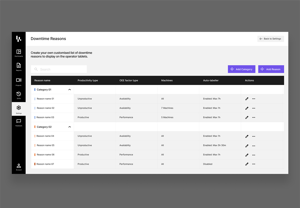
CTA_Downtime

Frequently Asked Questions

Explore our FAQs to learn more and to understand how FourJaw can help support revenue growth with more saleable production capacity.

How can production monitoring support revenue growth?

Production monitoring helps teams identify capacity losses. Recovering that capacity can support additional fulfilled orders when demand, materials, people and downstream processes are available.

What is the difference between increasing output and increasing revenue?

Output measures production volume. Revenue depends on sales and accounting treatment. Producing more supports revenue growth only when those products satisfy customer demand and generate sales.

Can FourJaw help us assess whether to accept more work?

Not in isolation, but production history stored within FourJaw helps teams understand performance and constraints. Teams can then combine it with the order book, material availability and planning information to assess additional commitments.

How should we measure the commercial impact?

Track additional orders fulfilled and their revenue and contribution. Account for changes in prices, product mix, operating costs and investment when assessing the result.

Here's an example of how you can measure the commercial impact:

1. Confirm the demand or orders that additional capacity could serve.

2. Find the constraint limiting saleable output and quantify its avoidable losses.

3. Implement an improvement and prove sustained additional good output.

4. Translate the extra capacity into credible order commitments with sales and planning.

5. Track incremental fulfilled orders and revenue, accounting for product mix, price changes, extra costs and any additional investment.

Measure success: Additional saleable units, extra orders accepted and fulfilled, incremental revenue and contribution, and capacity investment required. Unused capacity alone is not revenue.