Grow Manufacturing
Output
Output
Find the capacity to produce more
by recovering lost production time.
Increase manufacturing output from your existing machines
FourJaw’s production monitoring software supports manufacturers to identify lost production time, understand downtime and increase output.
Give your team the evidence to improve performance before adding machines, people or shifts.

Make more from your available production time
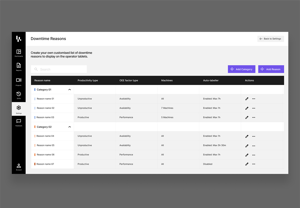
A busy factory can still have unused capacity. FourJaw combines live machine activity with operator-recorded downtime reasons to show where time is lost and why.
Teams can then use that evidence to prioritise changes to maintenance, changeovers, material flow or operator support.
See where setup, waiting and recurring stoppages reduce the time available for production.
Growing Manufacturing Output with FourJaw
"This Biotechnology manufacturer wanted to meet growing contract demand within its existing operating hours before considering 24/7 working."
E&O Laboratories introduced machine monitoring and structured downtime capture on plate and bottle lines, then used the data in production reviews to tackle changeovers, shift starts and recurring breakdowns. Selected lines moved from utilisation in the mid-30% range to above 50%. Annual production rose from about 40 million units to 50 million in two years.
"Lister Windows saw rising demand that created a need for more production without additional staff or equipment."
Listers installed FourJaw across six production lines, giving operators and managers live utilisation, downtime and energy information for improvement decisions.
The published results include a 10% productivity improvement, 12% higher machine utilisation and more than 250 additional windows per week using existing resources.
Find the capacity
already in your factory
Growing Output & Reducing wasted Energy with FourJaw
The results:
- 10% productivity increase across its production lines.
- 12% higher machine utilisation, equating to over 250 additional windows produced per week using existing resources.
- A 10% reduction in wasted energy and energy savings of thousands of pounds per month were identified by removing inefficiencies, such as an air compressor that was leaking power.
- Lower carbon emissions, strengthening sustainability credentials and customer confidence.
- Workforce empowerment, with operators using live machine data to diagnose issues faster, reduce downtime, and build new digital skills.
Trusted By Leading Manufacturers
Manufacturing Success Stories
Maximising production resources in consumer healthcare manufacturing
Unlocking capacity to support growth at leading Biotechnology company
How Enztec Lifted CNC Uptime from 45% to 60%+ with Machine Monitoring
From Spreadsheets to Clarity in Automotive Remanufacturing
Ready to
Learn More?
Gain the visibility of your factory operations required to grow manufacturing output.
Book a personalised product demo and see how our production monitoring system can enable you to drive operational excellence.
Frequently Asked Questions about increasing manufacturing output
Start by measuring losses on the process that limits finished output. Reducing avoidable setup, waiting or breakdown time can release capacity within the existing factory.
Check out our customer case studies that demonstrate the impact our technology has.
FourJaw captures machine activity and combines it with downtime reasons and production information. Teams use this evidence to prioritise improvements and measure their effect.
Learn more here.
Higher utilisation can support more output, but quality, product mix and downstream constraints also matter. Measure good units produced alongside machine performance. Also remember, not all 'lost' capacity is recoverable (usable) capacity.
Track good units produced, productive hours at the bottleneck, avoidable downtime and machine utilisation. Compare periods with similar production hours and product mix.
It's very common for manufacturers who have growing demand or existing production bottlenecks that affect on time delivery to look at ways to increase and improve production output. But getting to the answer and the reasons behind the goal are often different, for example:
-
Machines appear busy, yet production cannot keep up with demand.
-
Setup, inspection, breakdowns or gaps in operator coverage consume capacity.
-
Manual reporting makes it difficult to agree where improvement effort should go.
-
Additional machines, people or shifts would increase the cost and complexity of growth.
1. Select the machines or lines constraining finished output and agree the production window being measured.
2. Validate machine-state detection and train operators to record meaningful downtime reasons.
3. Rank the largest avoidable losses by duration and their effect on the bottleneck.
4. Assign an owner to one intervention, such as changeover preparation, operator coverage or recurring breakdown repair.
5. Compare equivalent production periods and verify both productive hours and good units produced. Keep the improvement in daily and weekly reviews.
Measure success: Good units per week, bottleneck productive hours, avoidable downtime and utilisation within a consistent planned-production window. Track product mix and quality alongside output.


